

.webp)



U.S. and Chinese officials set out opposing visions for U.S.-China AI regulation at a United Nations meeting on September 23, 2026. The United States argued that countries should retain authority over AI policy, while China urged closer coordination on safeguards, governance, and technical standards. Their statements underscored the political challenge of reaching common rules for rapidly advancing AI systems, including generative AI services and other artificial intelligence applications.
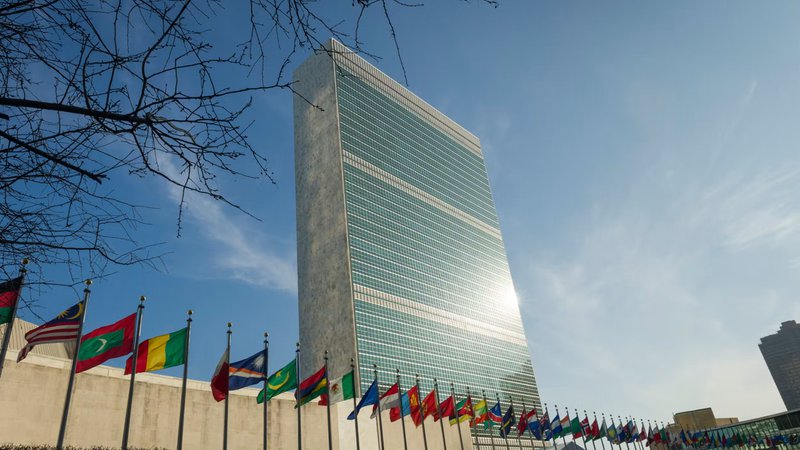
The positions were presented during a UN General Assembly Security Council meeting in New York. Michael Kratsios, director of the White House Office of Science and Technology Policy, rejected what he described as a global scheme to control superintelligence. He said the United States supported diplomacy and dialogue but wanted governments to preserve national sovereignty rather than transfer responsibility for AI regulation to international bodies. The approach reflects a preference for national AI measures and continued American leadership in advanced artificial intelligence innovation.
China’s UN representative, Fu Cong, called for countries to align their AI development strategies, governance approaches, and technical standards. He advocated a consensus-based global framework with institutional guardrails to protect international peace and public security. Fu also warned against an “us-versus-them” approach that, in China’s view, could allow major powers to use technological dominance to preserve a competitive edge. His position would require greater coordination among national security commissions, state agencies, and international bodies.
U.S.-China AI Regulation Exposes a Global Fault Line
The disagreement comes as national governments and technology companies pursue different routes to AI safety. President Donald Trump told the UN General Assembly on September 22 that the United States was ahead of China in AI and intended to maintain that lead. At the same time, OpenAI CEO Sam Altman called for complementary national and international standards for frontier AI, while Anthropic CEO Dario Amodei reiterated support for international cooperation so that safety measures keep pace with capability development.
The debate also spans AI-generated content, content moderation, labeling, child safety, cybersecurity, and the use of generative artificial intelligence services. In the United States, the federal trade commission and other United States agencies may address specific risks through existing authorities, while China’s cyberspace administration and other regulators continue developing national requirements.
The UN has already established a formal venue for those discussions. Its Global Dialogue on AI Governance brings all 193 UN Member States together with business, civil society, academia, and technical experts. The first annual dialogue took place in Geneva on July 6–7, 2026, and the next is scheduled for New York on May 3–4, 2027. The process is intended to connect existing initiatives and build common ground, rather than replace national or regional regimes.
What the Split Means for AI Compliance and Product Teams
For organizations developing or deploying AI, the immediate implication is regulatory fragmentation. A global company may need to satisfy requirements in the markets where it develops a system, places an AI-enabled product on the market, or uses the system’s output. Nemko Digital’s guidance on AI governance frameworks and compliance describes the organizational policies, roles, risk controls, documentation, and monitoring that support responsible AI use. These controls can help teams respond to different AI regulations, policy notices, and relevant laws across jurisdictions.
Existing frameworks provide concrete reference points while international negotiations continue. The EU AI Act establishes harmonized rules, including obligations for high-risk systems, certain transparency duties, market monitoring, and governance. Its scope can also reach providers outside the EU when an AI system’s output is used in the Union. Organizations can consult the official EU AI Act text and Nemko Digital’s overview of EU AI regulations when assessing market access and product obligations.
In the United States, the NIST AI Risk Management Framework remains a voluntary framework for incorporating trustworthiness considerations into the design, development, use, and evaluation of AI products and services. NIST says the framework is being revised and has also published work on a critical-infrastructure profile. The NIST AI Risk Management Framework therefore remains relevant to cybersecurity, risk, and governance teams even without a comprehensive federal AI law or a single global rulebook. Companies can use its risk-management framework to support security assessments and document AI measures.
The next milestones to watch are future UN dialogue sessions, further national and regional rules, and the standards work that may make different regimes more interoperable. Organizations should also track U.S. state laws, state administration initiatives, and any future federal policy statement or AI bill. Until governments converge, organizations should monitor policy changes across target markets and maintain evidence that can support risk, security, compliance, and product decisions under more than one framework.