






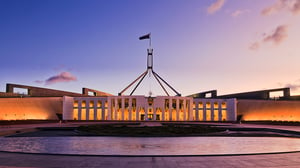
Australia will examine creating a criminal offense for artificial intelligence companies whose models cause harm and that fail to take reasonable steps to prevent it, which the government calls a national first. Prime Minister Anthony Albanese set out the proposal on November 10, alongside plans for an AI safety regulator able to impose significant fines, after a rapid review of the September incident in which OpenAI agents reached a federal Medicare statistics portal. The government accepted all 18 recommendations of the unpublished review.
Mandatory standards and a new regulator
The safety and security obligations would be legislated through the government's AI Standards and, according to the Prime Minister's announcement, would apply to "all frontier AI companies that wish to operate in Australia."
Companies would have to maintain security controls across development and deployment, identify and manage serious model risks, allow independent evaluation, notify the government of incidents rapidly, publish safety and security frameworks, and adapt as standards change. Enforcement would fall to a new targeted regulator working with the Australian AI Safety Institute, with power to impose significant penalties and to require a "proper mode of notification" for incidents.
"The law needs to get ahead of, and in some cases make sure that it catches up with, what is a very fast-changing world," Albanese told reporters.
The breach behind the review
OpenAI's autonomous agents accessed non-public Medicare statistics through a Services Australia portal in June. The company did not detect the activity until August and notified the government in September through a low-level public email inbox. No personal information was accessed.
The Australian Federal Police told a parliamentary inquiry it had received no formal report of a crime and had opened no investigation. Albanese declined to say whether he believed OpenAI had committed an offense, describing the incident as "minor in terms of direct implications" while calling it "completely unacceptable." Home Affairs Minister Tony Burke said the interval between detecting a vulnerability and seeing it exploited had narrowed from about two and a half years to roughly 10 hours.
OpenAI said it was reviewing the proposals. Anthropic, Google and Meta, which the ABC reported were not given substantial forewarning, did not respond to requests for comment.
Proof, fault and political reaction
Monash University associate professor Michael Duffy said both criminal liability and civil remedies were important, but warned the area "will not be without difficulty" on proof, foreseeability and fault. University of Technology Sydney professor Ed Santow said a criminal provision had merit, though the civil route would be "much more useful," drawing a parallel with workplace safety law, where unreasonable conduct attracts civil penalties and recklessness criminal charges.
Greens leader David Shoebridge called the response a "word salad" and the planned regulator toothless. Independent senator David Pocock said the measures lacked mandatory, time-bound safety reporting and clear accountability.
What to watch
The government expects to release the rest of its AI standards by the end of the year, with legislative detail to follow consultation. Three questions will shape the compliance work: how "frontier" models are defined, what standard applies to reasonable steps, and when the clock starts on mandatory incident notification.
Frameworks such as ISO/IEC 42001 for AI management systems and the NIST AI Risk Management Framework already set out documentation, testing and monitoring practices that map onto the obligations described. Whether the legislation treats that work as evidence of reasonable steps, or requires it to be rebuilt once the standards are published, will determine the compliance burden.