

.webp)




Understanding the EU Data Governance Act: A Framework for Trusted Data Sharing
The Data Governance Act creates trusted data sharing in the EU. Learn how to comply, access new data sources, and fuel business innovation.
The Data Governance Act (DGA) is a key component of the European Union's data strategy, establishing a robust framework to facilitate voluntary data sharing. It aims to unlock the vast potential of data for economic and societal benefit by increasing trust, creating new opportunities for innovation, and ensuring data is handled according to core EU values.
A New Foundation for the European Data Economy
At its core, the Data Governance Act seeks to create a secure and trustworthy environment for data to flow freely within the EU, supporting the development of Common European Data Spaces in strategic sectors like health, energy, and mobility. It moves beyond the principles of open data by setting the conditions for reusing sensitive, protected data held by public sector bodies, such as commercially confidential information or personal data, always in full compliance with regulations like the GDPR.
This regulation is not static. In a significant 2025 development, the European Commission proposed the Digital Omnibus initiative, which aims to streamline the EU’s digital rulebook by consolidating the DGA and other related regulations into the broader Data Act. This move is designed to enhance legal clarity and reduce the compliance burden for businesses, making the data-sharing landscape even more accessible.
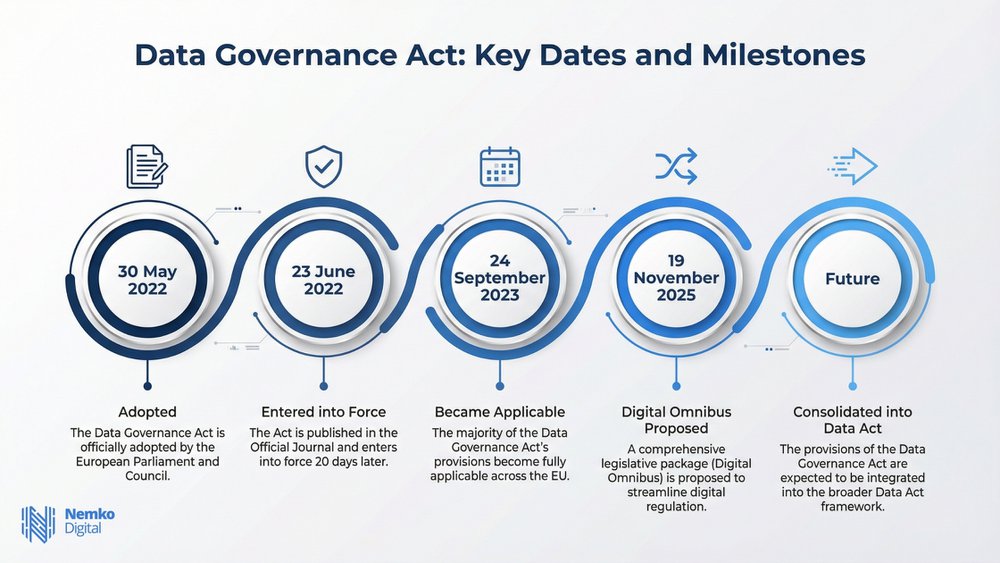
The Core Pillars of the Data Governance Act
The DGA is built on three foundational pillars, each designed to address specific obstacles to data sharing and create new mechanisms for a more vibrant data economy.
| 1. Reuse of Public Sector Data | To unlock the value of sensitive data held by public bodies that cannot be released as open data. | - Public sector bodies must establish secure processing environments to facilitate reuse.- Exclusive reuse agreements are strictly limited to cases of public interest.- Businesses can gain access to high-value datasets for research and innovation. |
| 2. Data Intermediation Services | To create a new class of neutral, trustworthy third parties (e.g., data marketplaces) that connect data holders with data users. | - Intermediaries cannot use the data for their own profit, ensuring neutrality.- A voluntary EU-wide label will certify trusted providers, simplifying partner selection.- This provides a secure alternative to the data-handling models of major tech platforms. |
| 3. Data Altruism | To make it easier and safer for individuals and companies to voluntarily make their data available for the common good, such as for scientific research or public health. | - Establishes a registry of “data altruism organisations recognised in the Union.”- A common European consent form simplifies the process of donating data.- Creates a trusted channel for businesses to contribute to and leverage data for societal benefit. |
From Compliance to Competitive Advantage
While the Data Governance Act introduces new compliance requirements, viewing it solely as a regulatory hurdle is a missed opportunity. For forward-thinking organizations, the DGA is a strategic enabler that provides a clear path to building a more resilient and innovative data-driven business model.
Challenges and Strategic Responses
- Navigating Complexity: The evolving regulatory landscape requires a clear understanding of how the DGA interacts with the GDPR and the upcoming Data Act. A proactive approach to why AI maturity and governance matter is essential.
- Resource Allocation: Achieving compliance demands investment in robust data governance frameworks, technology, and staff training. This includes implementing or updating an AI management system to ensure processes are secure and transparent.
Unlocking New Opportunities
- Enhanced Trust: Adhering to the DGA’s high standards demonstrates a commitment to ethical data handling, enhancing customer trust and strengthening brand reputation. This is a cornerstone of building AI Trust.
- Fueling Innovation: Access to previously inaccessible public-sector data creates unprecedented opportunities for developing new products, services, and insights, particularly in AI and big data analytics.
- New Business Models: The regulation fosters a market for trusted data intermediaries and collaborative data ecosystems, allowing businesses to create and capture new value.
Navigate the Data Governance Act with Confidence
The Data Governance Act is a transformative piece of legislation that redefines the principles of data sharing in the EU. It provides the tools and trust necessary to build a fair and prosperous data economy. By embracing its framework, organizations can not only ensure compliance but also unlock significant strategic advantages, turning regulatory obligations into a catalyst for growth and innovation.
As the digital landscape continues to evolve with regulations like the EU AI Act, establishing a strong data governance foundation is no longer optional—it is essential for future success. Nemko Digital provides the expertise and solutions to help your organization navigate this complex environment with confidence.