

.webp)




EU Digital Services Act (DSA) Compliance: A Strategic Guide for Digital Platforms in 2026
The Digital Services Act (Regulation (EU) 2022/2065) sets unified EU rules for digital services, requiring intermediaries and major platforms to follow stricter responsibilities and due diligence obligations.
The EU Digital Services Act (DSA) is no longer an emerging framework; it is an actively enforced regulation reshaping how digital platforms manage risk, transparency, and accountability across the EU digital space. Since becoming fully applicable in February 2024, the DSA has entered a decisive enforcement phase, with investigations, fines, and structural compliance expectations intensifying across 2025–2026 (European Council overview of the Digital Services Act). For organizations operating in or targeting the EU market, EU Digital Services Act compliance (and broader DSA compliance) is now a core operational requirement—and a strategic opportunity to build digital trust at scale through clear rules, measurable service standards, and verifiable transparency ethics.
What is the Digital Services Act?
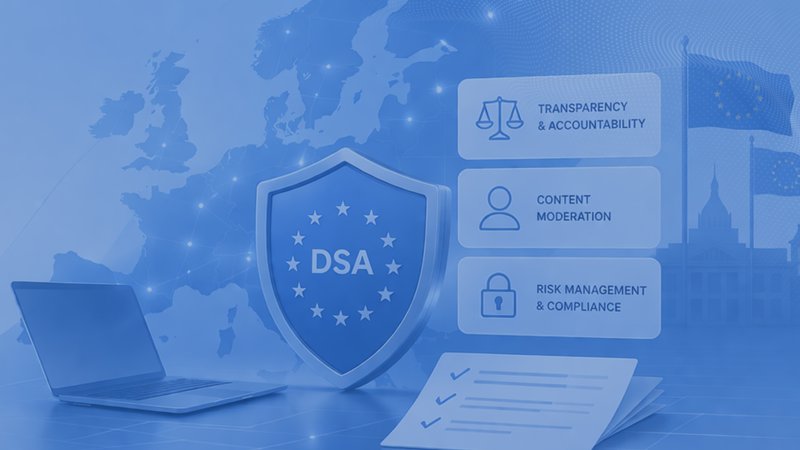
Figure 1: DSA aims to create a safe, transparent, and accountable online ecosystem, addressing risks such as illegal content, disinformation, and harmful platform design
The DSA—formally Regulation (EU) 2022/2065—establishes a harmonized framework for digital services across the EU, introducing due diligence obligations for intermediaries and enhanced responsibilities for large platforms and other digital service providers (including marketplaces, content-sharing platforms, and certain search engines).
You can review the official Digital Services Act text on EUR-Lex for full legal details.
The regulation aims to create a safe, transparent, and accountable online ecosystem, addressing risks such as illegal content, disinformation, and harmful platform design, as outlined by the European Commission’s Digital Services Act policy page. In practice, the DSA’s obligations also reflect EU law principles tied to fundamental rights, including protections that shape how platforms handle reported content and moderation at scale.
The Architecture of the DSA: A Risk-Based Regulatory Model
The DSA introduces a tiered compliance structure, where obligations scale with platform size and societal impact (including heightened requirements for designated platforms such as VLOPs/VLOSEs).
| Intermediaries | ISPs, DNS | Basic transparency |
|---|---|---|
| Hosting Services | Cloud providers | Notice-and-action |
| Online Platforms | Marketplaces, social media | User protection, transparency |
| VLOPs/VLOSEs | Meta, TikTok | Systemic risk management, audits |
This structure reflects a fundamental regulatory principle:
Accountability increases with platform influence and systemic risk exposure—especially for powerful tech platforms and other large online platforms (VLOPs) with outsized societal reach.
Scope: Why the DSA Is a Global Standard
The DSA applies to any company offering digital services to EU users, regardless of where the company is established.
Key Scope Triggers
- Services accessible in the EU
- Platforms hosting user-generated content
- Marketplaces facilitating EU transactions
Strategic Insight:
This extraterritorial scope positions the DSA as a global benchmark for digital platform governance, influencing regulatory developments worldwide—alongside parallel initiatives (and debate) around proposals sometimes framed as a digital fairness act.
Core Obligations: Translating Law into Practice
1. Notice-and-Action Systems
Platforms must implement structured mechanisms to:
- Identify illegal content
- Process user reports
- Remove or restrict content efficiently
Operational Insight:
Effective compliance requires scalable, auditable moderation systems—not reactive workflows—and consistent handling of reported content, including edge cases like alleged illegal hate speech (where definitions and legal thresholds vary by context and Member State).
2. Transparency as a System Capability
The DSA mandates transparency across:
- Content moderation decisions
- Advertising systems (ad transparency)
- Algorithmic recommendations and algorithmic recommender systems
Users must also be able to appeal decisions and access dispute resolution mechanisms, reinforcing accountability across platforms and supporting good administration expectations in regulatory interactions. These transparency duties also intersect with user experience requirements, including valid user consent flows for certain design and advertising practices.
3. Systemic Risk Management (VLOPs)
Very Large Online Platforms (45M+ EU users) must:
- Conduct annual risk assessments
- Mitigate risks such as disinformation, electoral manipulation, and child safety harms (including minors - platforms safeguards)
- Provide data access to vetted researchers
The European Commission has confirmed that the 45 million user threshold remains appropriate, ensuring proportional regulatory oversight (European Commission evaluation of DSA thresholds).
4. Ban on Dark Patterns
The DSA prohibits manipulative interface designs that distort user decision-making.
This includes:
- Misleading consent mechanisms
- Hidden opt-outs
- Interface bias
Key Takeaway:
User experience design is now subject to regulatory scrutiny, elevating UX into a compliance function, especially for social media platforms and content-sharing platforms that rely heavily on engagement-driven interfaces.
5. Traceability of Online Sellers
Online marketplaces must:
- Verify trader identities
- Display seller information
- Ensure product traceability
This requirement transforms platforms into active participants in consumer protection and compliance enforcement.
Enforcement in Action: 2025–2026 Developments
The DSA has entered a mature enforcement phase, with regulators actively testing compliance across major platforms, while also clarifying expectations for smaller platforms under proportionate DSA obligations.
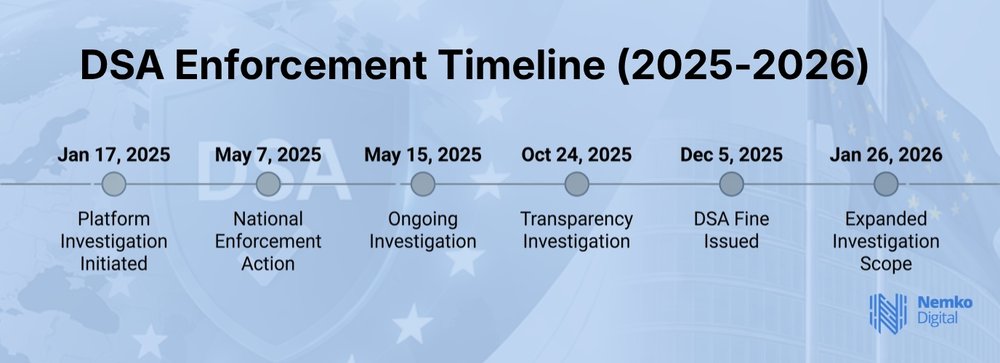
Key Enforcement Signals
- The first significant fines under the DSA have already been issued for transparency and reporting failures, including missed or inadequate reporting periods
- Ongoing investigations into major platforms—including Meta and TikTok—focus on systemic risk management and data access obligations, supported by internal and external audit functions (including the role of a dedicated DSA audit team in mature organizations)
- The European Commission has taken action against EU member states (Member States) for failure to fully implement national supervisory structures, in coordination with EU-level bodies such as the European Board for Digital Services
Regulators have the authority to impose penalties of up to 6% of global annual turnover, reinforcing the material financial risk of non-compliance (European Commission DSA enforcement framework). Where failures persist, enforcement can escalate into broader sanctions and, in extreme cases, structural remedies.
Insight:
DSA enforcement is now continuous, data-driven, and proactive—marking a shift from policy to operational scrutiny. In parallel, organizations should monitor related EU instruments (including potential updates via a delegated act where applicable) and industry alignment mechanisms such as a DSA voluntary code or revised code adopted by stakeholders.
Strategic Implications: From Compliance to Capability
1. Compliance Is Cross-Functional
DSA readiness requires coordination across:
- Legal and compliance teams
- Engineering and product development
- Data governance and AI systems
Siloed approaches are no longer viable.
2. Transparency Becomes Infrastructure
Organizations must build:
- Explainable AI systems
- Audit-ready reporting pipelines
- Real-time compliance monitoring capabilities
3. Risk Management Becomes Continuous
The DSA introduces a lifecycle approach to risk:
- Identification
- Mitigation
- Monitoring
- Documentation
Building a DSA Compliance Framework
A mature approach to EU Digital Services Act compliance includes:
Governance Layer
- Executive accountability and board oversight
- Clearly defined compliance ownership
- Integration into enterprise risk management
- Documented alignment with applicable DSA obligations under EU law, including fundamental rights considerations
Operational Layer
- Scalable moderation workflows (for illegal content and other policy breaches)
- Structured risk assessment processes (especially for VLOPs)
- Incident response and escalation mechanisms
Technical Layer
- Algorithm auditing and explainability tools
- Data traceability and access controls
- Automated transparency reporting systems
For many organizations, success also comes down to executing five critical steps: map obligations, assess risk, implement controls, operationalize reporting, and prove compliance through evidence.
How Nemko Digital Enables DSA Compliance
Nemko Digital supports organizations in transforming regulatory requirements into operational, technical, and strategic capabilities—from baseline readiness for smaller platforms to advanced governance for designated platforms and other large online platforms.
Explore how we help:
- Strengthen AI governance and regulatory compliance frameworks
- Build risk-based compliance and assurance systems
- Access expert insights on digital regulation and trust
- Engage with Nemko Digital specialists for tailored guidance
With deep expertise at the intersection of technology, regulation, and assurance, Nemko Digital enables organizations to move beyond compliance—toward trusted, resilient, and future-ready digital ecosystems.
Business Impact: Why the DSA Matters
Trust as a Competitive Advantage
Transparency and accountability are becoming critical differentiators in digital markets—particularly where users, regulators, and civil society expect consistent service standards and measurable transparency ethics.
Operational Complexity
Compliance requires integrated governance across technical, legal, and product functions—including moderation operations for illegal content, robust ad transparency controls, and defensible processes for handling reported content.
Global Influence
The DSA is shaping emerging regulatory frameworks worldwide, setting a new standard for platform accountability and influencing how digital service providers design safety, governance, and risk programs.
Navigate the Regulation with Confidence
The Digital Services Act represents a structural shift in digital governance. Enforcement is active, expectations are rising, and regulatory scrutiny is intensifying. Organizations that succeed will treat EU Digital Services Act compliance not as a checkbox—but as a core capability embedded into their digital infrastructure, governance, and strategy.
Partner with Nemko Digital to turn regulatory complexity into clear, actionable, and scalable compliance solutions.